Guides · Port St. Joe, Florida
What Is Port St. Joe Known For? History & Charm
Port St. Joe does not trade on discovery. It trades on memory — and the memory is of a city that died so Florida could be born.
How a Dead Town Became Florida's Birthplace
The original St. Joseph was a boomtown built on cotton and cotton shipping. For a brief window, it was the most important place on Florida's Gulf coast. In the winter of 1838–39, territorial delegates gathered there to draft the state's first constitution, meeting from 3 December 1838 to 11 January 1839. They wrote the document that would govern Florida upon admission to the Union. Then, within three years, the town was gone. Yellow fever swept through in 1841; the population scattered or perished, and by 1841 the town was mostly abandoned. A hurricane storm surge in 1844 finished the work, destroying what remained and erasing the settlement from the map.
The modern town carries the saint's name of the settlement that died here — St. Joseph, with Port added. That is the founding paradox: a place that exists because another place, with the same name, was wiped out. Florida's statehood began here. The town's motto is still Birthplace of the Florida Constitution.
Port St. Joe Today: A Quiet, Rebuilt Community
The numbers describe a quiet, older, deliberately unhurried place. The population is 3,499 people, with a median age of 52.9 years — well above the statewide median. Thirty-three percent of residents hold a bachelor's degree or higher. The unemployment rate is 6 percent, and the median household income is $60,347. The housing stock tells the deeper story: 2,037 total units, of which 473 are vacant and 270 are held for seasonal or recreational use. Median home value is $280,600; median gross rent is $1,342.
Those 473 vacant units are not decay. They are the physical evidence of a rebuilt, seasonal, unhurried town. Everything here has been rebuilt at least once. The first town was erased by fever and storm within three years, and the port that replaced it took the same name. The vacancy is part of the pattern — a town that does not need to be full to be real.
| Then (1838–1844) | Now (Census, events, parks) |
|---|---|
| A booming cotton port hosting the constitutional convention | 3,499 residents, median age 52.9, 33% with degrees |
| Erased by yellow fever in 1841 | 473 vacant housing units, 270 seasonal homes |
| Destroyed by hurricane storm surge in 1844 | 6% unemployment, median income $60,347 |
| A town that died within three years of its founding | A town that rebuilt under the same saint's name |
Visit the Constitution Convention Museum State Park
The sole physical link to the erased original is the Constitution Convention Museum State Park, 14 acres outside town. The park houses a reproduction of the 1840s convention hall, along with audio-animated recreations of the 1838 delegates. It is not a grand monument; it is a modest, deliberate reconstruction of a room where history was written. The original hall, like the town around it, is gone. The reproduction is the only place where a visitor can stand in the presence of that moment — even if the presence is a re-creation.
Is it worth visiting? If the question is whether it is a polished attraction, the answer is no. If the question is whether it matters, the answer is yes. It is the single place in Florida where the state's constitutional origin is marked and explained, and it does so without pretending the original survived.
Cape San Blas Lighthouse: A Survivor of the Original Town
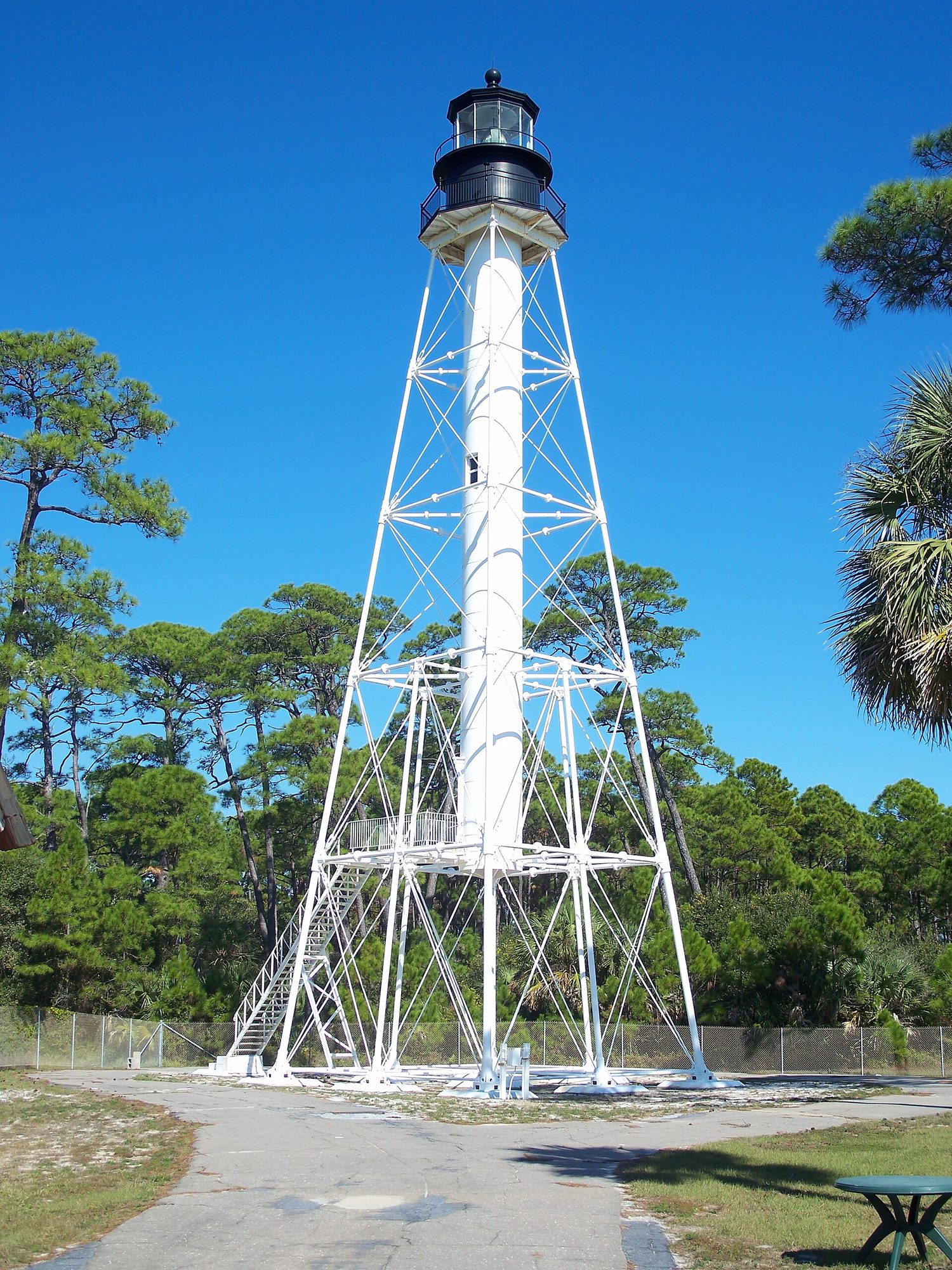
West of town, in Gulf County, sits Cape San Blas and its lighthouse. The cape is a thin spit of land reaching into the Gulf. The lighthouse has been rebuilt and moved multiple times as the shoreline shifted. It is the surviving landmark from the era of the original settlement — not because it was spared, but because it was repeatedly rebuilt, just like the town. The lighthouse anchors the coastline's memory of the first St. Joseph, even as the town itself vanished. It is a working navigational aid, not a memorial. That is precisely its value: it keeps functioning.
Scallop Season Ends with the Labor Day Festival
The modern town ties itself to the working water through the Florida Scallop, Music & Arts Festival, held Labor Day weekend at Gulf County Veterans Memorial Park on Beacon Hill, run by the Gulf County Chamber of Commerce. The festival closes out the scallop season that the coast is named for. It is a seasonal marker, not a year-round attraction — a way of acknowledging that the bay still provides, and that the town still pays attention to the water. The scallop season has a beginning and an end; the festival honors the end.
Why 'Birthplace of the Florida Constitution' Matters
The motto — Birthplace of the Florida Constitution — is the single accurate claim the town can make. It is not a boast about size, wealth, or beauty. It is a statement of origin, and every other fact about Port St. Joe flows from that origin and its loss. The town is known not for what it has but for what it lost and rebuilt. The constitution was written in a settlement that fever and storm erased within three years; the modern town carries the name and the document's legacy. That is not a story about hidden gems or undiscovered beaches. It is a story about a place that died for statehood, and the quieter town that rose in its place.
Common questions
- What happened to the original town of St. Joseph?
- The original St. Joseph was mostly abandoned in 1841 after a yellow fever epidemic, and a hurricane storm surge in 1844 destroyed what structures remained. The town was gone within six years of Florida's first constitution being written there in 1838-1839.
- Why is Port St. Joe called the Birthplace of the Florida Constitution?
- Territorial delegates met at St. Joseph from 3 December 1838 to 11 January 1839 to write Florida's first constitution, which led to statehood. The town's motto is still Birthplace of the Florida Constitution, and the Constitution Convention Museum State Park commemorates this.
- What can I see at the Constitution Convention Museum State Park?
- The park is 14 acres outside town and features a reproduction convention hall with audio-animated recreations of the 1838 delegates. It's the main historical site explaining how Florida's statehood began here.
- Is Port St. Joe a good place to live or just a vacation spot?
- Of 2,037 housing units, only 270 are for seasonal or recreational use, so it's mostly a permanent community. Median age is 52.9 years, median home value is $280,600, and 33 percent of residents hold a bachelor's degree or higher.
- What's the population of Port St. Joe and what's the economy like?
- The population is 3,499 people. The unemployment rate is 6 percent, median household income is $60,347, and median gross rent is $1,342. The town has been rebuilt at least once since the original settlement was erased.
- What events happen in Port St. Joe?
- The Florida Scallop, Music & Arts Festival takes place Labor Day weekend at Gulf County Veterans Memorial Park on Beacon Hill, run by the Gulf County Chamber of Commerce. It closes out the scallop season. Nearby, Apalachicola hosts the Florida Seafood Festival.
Every business named above is one we hold a listing for, and every date traces to a source on our sources page. We do not describe menus, interiors or service we have not verified. Details change — confirm before you travel.