Guides · Port St. Joe, Florida
Port St. Joe Winter Guide: History, Quiet, and Coast
St. Joseph, Florida, wrote the state's first constitution in 1838, and was gone by 1844—fever, then storm—leaving the modern town that bears its name to rebuild on purpose, quietly, and for the long winter.
The Town That Died, and the Name That Stayed
The original town of St. Joseph was a boomtown built on cotton and ambition, and it was the place where Florida's statehood began. Territorial delegates met there from 3 December 1838 to 11 January 1839 to write the state's first constitution, and the town's motto still claims that legacy: Birthplace of the Florida Constitution. But the boom did not hold. A yellow fever epidemic in 1841 scattered the population, and a hurricane storm surge in 1844 destroyed what structures remained. The town was mostly abandoned within three years of its founding. The modern town carries the saint's name of the settlement that died here—St. Joseph, with Port added—and everything here has been rebuilt at least once. The first town was erased by fever and storm within three years, and the port that replaced it took the same name. That is not a metaphor; it is the literal reason the town exists as it does.
What Winter Actually Looks Like in Port St. Joe
The modern town of Port St. Joe is small: 3,499 people, with a median age of 52.9 years. Of its 2,037 total housing units, 270 are held for seasonal or recreational use, and 473 sit vacant—numbers that become visible in winter, when the streets quiet and the pace slows to something deliberate. This is not a resort town dressed for a crowd; it is a working Gulf Coast community that empties out after the warm months. For a winter visitor, that means fewer people, clearer horizons, and a kind of stillness that suits a place whose history is one of erasure and deliberate return. The quiet is not an absence of life; it is the town's natural register.
The Constitution Convention Museum: A Window on Statehood
The centerpiece of any winter visit is the Constitution Convention Museum State Park, set on 14 acres outside town. The park houses a reproduction of the 1838 convention hall, built to evoke the room where delegates drafted the document that would carry Florida into the Union. What makes it remarkable is the audio-animated recreations of the delegates themselves—figures that speak and move, reenacting the debates of that winter session. It is the only place in Florida where you can hear the voices of the 1838 delegates, recreated with audio-animatronics.
The museum does not simply display artifacts; it stages the argument of statehood in the very place where that argument first happened. For a winter visitor, it is the most direct way to understand why this small town matters—not as a footnote, but as a starting point.
Cape San Blas and the Lighthouse: Winter's Reward
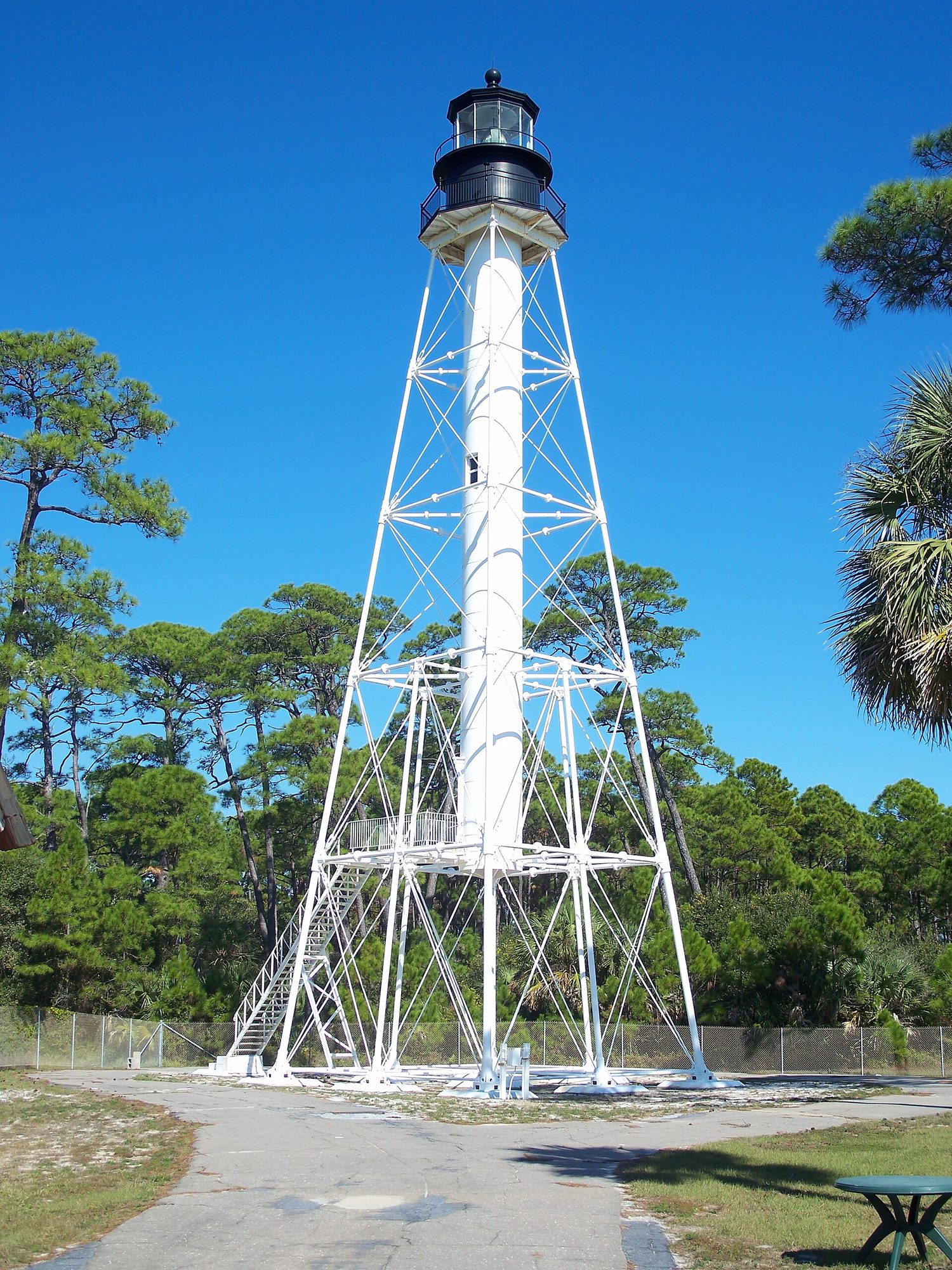
West of town, Cape San Blas pushes into the Gulf, and its lighthouse stands as the region's most enduring landmark. In winter, the cape is a cold-season destination in the truest sense: fewer people, clearer light, and a coastline that feels less like a postcard and more like a boundary. The lighthouse is not a relic to be climbed in a crowd; it is a marker of a coast that has survived storms and resets. For a winter resident, it offers the reward of solitude—a place to walk, think, and watch the water without the noise of summer.
Living in a Rebuilt Place: Housing and Economics
For someone considering wintering in Port St. Joe, the housing market tells a story of stability rather than speculation. The median home value is $280,600, and the median gross rent is $1,342. Median household income sits at $60,347, with an unemployment rate of 6 percent. A third of residents—33 percent—hold a bachelor's degree or higher, which suggests a town with a professional core but without the pressure of a metropolitan economy. The 473 vacant units and 270 seasonal units mean that winter housing is available, though not necessarily cheap; the market is shaped by second-home demand, not by a glut of rentals. The median age of 52.9 years reinforces the sense of a place where people come to stay, not to start over.
Winter's End: The Scallop Season Approaches
The annual rhythm of Port St. Joe culminates not in winter but at its end. The Florida Scallop, Music & Arts Festival runs Labor Day weekend at Gulf County Veterans Memorial Park on Beacon Hill, run by the Gulf County Chamber of Commerce, and it closes out the scallop season the coast is named for. For a winter resident, that festival is a marker of the year's turning—the moment when the quiet town begins to stir again, and the seasonal residents return. It is a reminder that this is a place of cycles: the town died once, was rebuilt, and still measures its year by the harvest of the water.
| Indicator | Value |
|---|---|
| Population | 3,499 people |
| Median age | 52.9 years |
| Total housing units | 2,037 units |
| Seasonal/recreational units | 270 units |
| Vacant housing units | 473 units |
| Median home value | $280,600 |
| Median gross rent | $1,342 |
| Median household income | $60,347 |
| Bachelor's degree or higher | 33 percent |
| Unemployment rate | 6 percent |
Port St. Joe is a good place to spend the winter if you want the quiet of a small town whose history is not decorative but foundational. It is remote, limited in scale, and shaped by a catastrophe that erased its predecessor. But that is precisely its character: a place rebuilt on purpose, with a museum that speaks, a cape that endures, and a name that survived its own death.
Common questions
- What happened to the original town of St. Joseph?
- The original St. Joseph was mostly abandoned in 1841 after a yellow fever epidemic, and a hurricane storm surge in 1844 destroyed what remained. The town died within six years of writing Florida's first constitution, but the modern town carries its name with Port added.
- Where was Florida's first constitution written?
- Territorial delegates met at St. Joseph from 3 December 1838 to 11 January 1839 to write Florida's first constitution. The town's motto is still Birthplace of the Florida Constitution. You can visit the Constitution Convention Museum State Park, 14 acres outside town, with a reproduction convention hall.
- Is Port St. Joe a good place to retire?
- The median age is 52.9 years, and 33 percent of residents hold a bachelor's degree or higher. Median home value is 280,600 dollars, with median gross rent at 1,342 dollars. It's a small town of 3,499 people, quiet and rebuilt from scratch, suited for slower living.
- What is there to do in Port St. Joe in winter?
- Winter is quiet, but you can visit the Constitution Convention Museum State Park, or drive west to Cape San Blas and its lighthouse. The Florida Scallop, Music & Arts Festival happens Labor Day weekend, not in winter, so expect a low-key season with few crowds.
- How far is Port St. Joe from Apalachicola?
- Apalachicola is 23 miles away, and St. George Island is 31 miles. Both make easy day trips for the Florida Seafood Festival or the St. George Island Chili Cook-Off. Perry is 121 miles, Steinhatchee 134, and Cedar Key 163, if you want to venture further.
- What is the housing situation in Port St. Joe?
- There are 2,037 total housing units, with 473 vacant and 270 held for seasonal or recreational use. That means about a quarter of homes are empty much of the year, reflecting a vacation market. Median home value is 280,600 dollars, and unemployment is 6 percent.
Every business named above is one we hold a listing for, and every date traces to a source on our sources page. We do not describe menus, interiors or service we have not verified. Details change — confirm before you travel.