Guides · Port St. Joe, Florida
How Port St. Joe Got Its Name
The town’s name is a memorial, not a description.
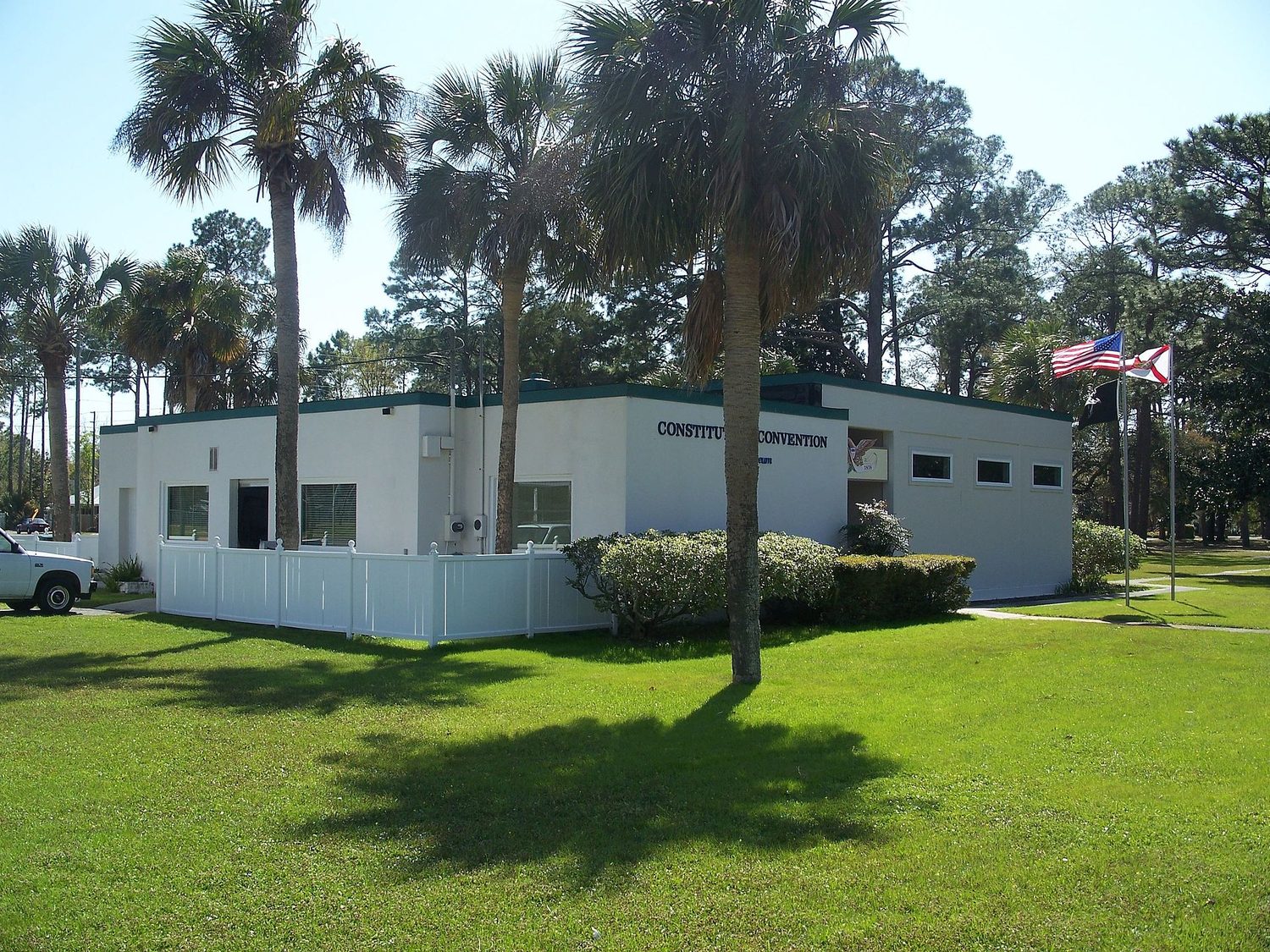
Port St. Joe carries the saint’s name of a settlement that died here. The original St. Joseph was erased within three years of its founding—first by yellow fever in 1841, then by a hurricane storm surge in 1844 that destroyed what structures remained. The port that replaced it took the same name, with Port added. Everything here has been rebuilt at least once.
That first town was not a footnote. Florida’s statehood began here. Territorial delegates met at St. Joseph from 3 December 1838 to 11 January 1839 to write the state’s first constitution. The town’s motto is still Birthplace of the Florida Constitution. A reproduction convention hall, with audio-animated recreations of the 1838 delegates, stands on 14 acres outside town. The original is gone. The memory is not.
What remains is a small place. The census counts 3,499 people. The median age is 52.9 years. This is not a young town, and it does not pretend to be. Of 2,037 housing units, 473 sit vacant. Another 270 are held for seasonal or recreational use. The numbers suggest a place people come to, and leave, and return to—often with a second home.
The economics are modest. Median household income is $60,347. Median home value is $280,600. Median gross rent is $1,342. Unemployment runs at 6 percent. A third of residents hold a bachelor’s degree or higher. These are not boomtown figures. They are steady, unflashy, and honest.
West of town, the Cape San Blas lighthouse still stands. It has been rebuilt and moved more than once. That is the pattern here. Storms and fever took the first town; the second town took the name. The lighthouse took the same punishment and kept its post. Nothing in Gulf County survives by staying still.
The name itself is a quiet act of defiance. Most Florida towns were named for boosters, railroad men, or land speculators. Port St. Joe was named for a dead city. The residents chose to keep the saint’s name attached to the place where the bodies were buried. That is not nostalgia. That is a statement.
The convention delegates who met here in the winter of 1838 did not know their town would be gone within six years. They wrote a constitution for a state that did not yet exist, in a town that would not last the decade. The document survived. The town did not. When the port was rebuilt, the name came back with it.
A visitor driving through today sees a working waterfront, a grid of streets, and a lot of sky. The town does not advertise its history loudly. It does not need to. The name does the work. Every time someone says Port St. Joe, they are saying the name of a place that died, and the name of the place that refused to let it go.
The census shows 270 seasonal homes. That means the population swells and shrinks with the tide. The median age of 52.9 suggests many of those seasonal homes become permanent ones, as people retire and settle where they once vacationed. The vacant units—473 of them—are not a sign of decline. They are a sign of waiting. The town has always been good at waiting.
It waited out the fever. It waited out the surge. It waited for the delegates to write their constitution, and it waited for the state to grow up around it. The name is patient. So is the place.
Every business named above is one we hold a listing for, and every date traces to a source on our sources page. We do not describe menus, interiors or service we have not verified. Details change — confirm before you travel.