Guides · Port St. Joe, Florida
Why Port St. Joe Is Where It Is
The town’s name is a confession of loss: St. Joseph died, and Port St. Joe is what the survivors built on the same ground.
A Name That Admits a Ghost
Port St. Joe does not hide its history. It carries the name of a settlement that was erased within three years of its founding. The original St. Joseph was a boomtown, a place of ambition on the Gulf of Mexico. Then came 1841, and yellow fever moved through the streets. The town was mostly abandoned. Three years later, a hurricane storm surge finished what the fever had started, destroying what structures remained.
Nothing about that is romantic. It is a fact of place. The modern town took the saint’s name of the dead settlement and added Port to mark the difference. The result is a name that acknowledges a predecessor and a rupture. Everything here has been rebuilt at least once. That is not a metaphor. It is the literal condition of the ground.
The Constitution Came First
What matters most about Port St. Joe is not the water or the sand. It is that Florida’s statehood began here. From 3 December 1838 to 11 January 1839, territorial delegates met at St. Joseph to write the state’s first constitution. The town’s motto is still Birthplace of the Florida Constitution. That is not a marketing slogan; it is a statement of legal fact.
The convention was held in a town that would not survive the decade. The delegates wrote a document for a state that would not exist for years, in a place that would be gone within six. There is a grim precision to that timeline. The constitution endured. The town did not.
What the Numbers Say
The present town is small. The population is 3,499 people. The median age is 52.9 years. That is an older town, a place where people come to stay, not to start over. The median household income is $60,347. The unemployment rate is 6 percent. The median home value is $280,600. The median gross rent is $1,342.
The housing data tells a quieter story. There are 2,037 total housing units. Of those, 473 are vacant. That is a vacancy rate of roughly 23 percent. And 270 units are held for seasonal or recreational use. Port St. Joe is not a full-time town for everyone who owns a roof here. It is a place of second homes and long absences, a pattern that echoes the original settlement’s fragility—though for different reasons.
Education levels are moderate: 33 percent of residents hold a bachelor’s degree or higher. This is not a college town. It is a working coast town with a deep historical marker at its center.
The Ground Outside Town
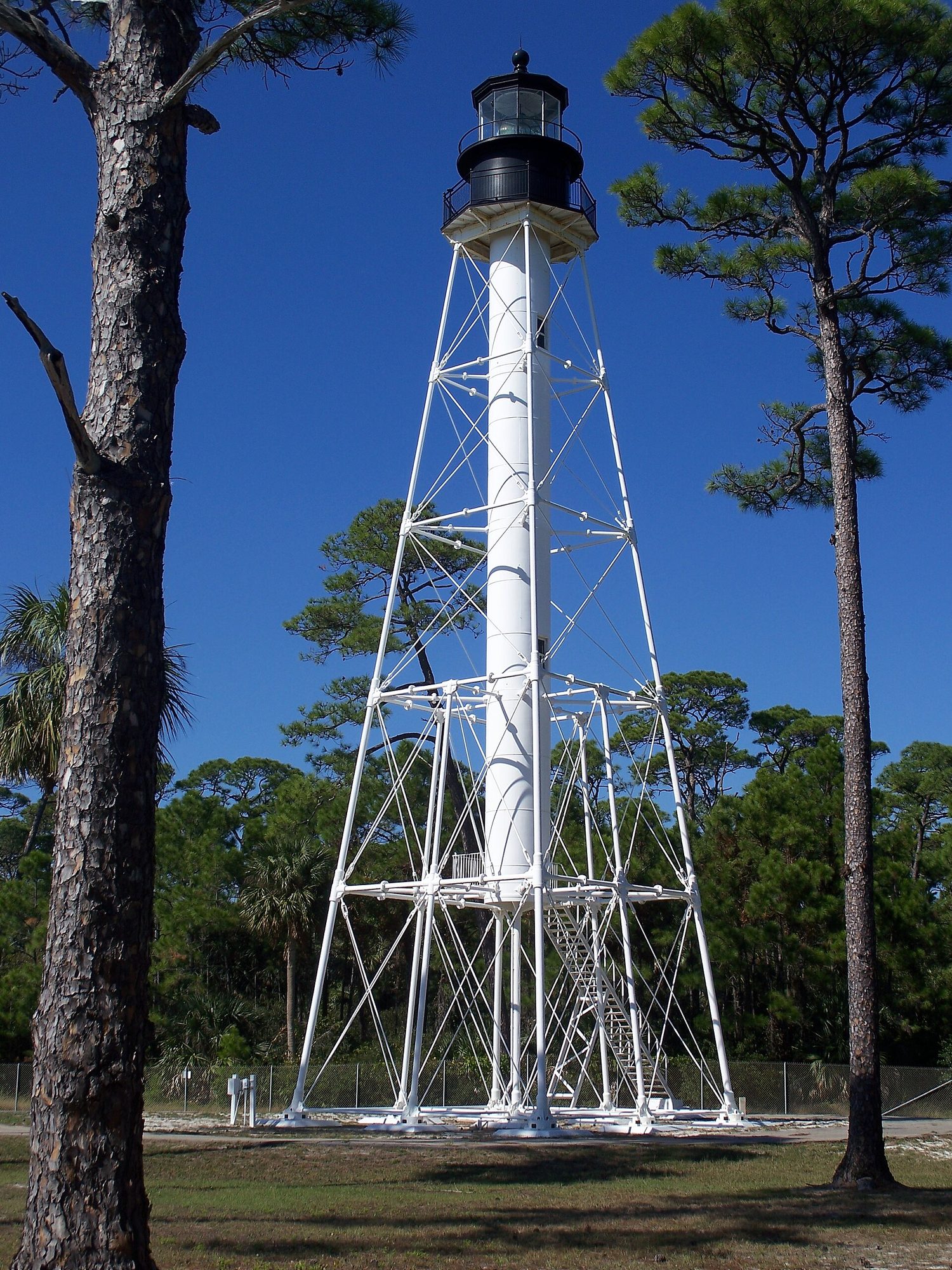
West of Port St. Joe lies Cape San Blas and its lighthouse. The cape is a barrier peninsula, a thin arm of sand that has been battered by storms for centuries. The lighthouse has been moved, rebuilt, and relocated over the years—an apt symbol for a region where permanence is provisional.
The cape is not a business and not a park to be named here. It is simply the geography that defines the town’s western edge. It is the reason Port St. Joe exists as a port at all. The bay and the cape create the harbor. The harbor created the town. The town died. The harbor remained.
A Town That Repeats Itself
What makes Port St. Joe remarkable is not that it survived. It is that it was rebuilt on the same spot, with the same name, after the first attempt was annihilated. The port that replaced the original took the same name. That is a stubbornness that borders on the irrational. It is also the whole story.
The original St. Joseph was a place of grand plans. It hosted a constitutional convention. It was a port. It was gone within six years of its founding. The modern Port St. Joe is a quieter place. It does not host conventions. It does not write constitutions. It exists, with a median age over 50 and a quarter of its housing stock empty at any given time.
There is no need to oversell this. The history does the work. A town that died and was rebuilt on its own grave, carrying the same name, is not a charming anecdote. It is a statement about how people attach themselves to land. The first town was erased by fever and storm. The second town took the name anyway.
That is why Port St. Joe is where it is. The harbor is good. The cape provides shelter. The bay is deep enough for a port. But those facts were true in 1838, too, and they did not save the first town. What saved the location was the harbor itself, and what saved the name was a decision to keep it.
The town’s motto is Birthplace of the Florida Constitution. It is a claim about the past, not the present. But it is also a claim about identity. Port St. Joe does not pretend to be a new town. It is a rebuilt town, and it says so in its name. The saint’s name was kept. The Port was added. The rest was left to the weather.
Every business named above is one we hold a listing for, and every date traces to a source on our sources page. We do not describe menus, interiors or service we have not verified. Details change — confirm before you travel.