Guides · Port St. Joe, Florida
The History of Port St. Joe in 6 Landmarks
The town of Port St. Joe carries the name of a settlement that died within six years of its founding, and what stands today is a third or fourth attempt at permanence on the same strip of Gulf County shore.
The Name Itself
Say it slowly. Port St. Joe. The "Port" was added to distinguish the modern town from its predecessor, but the saint’s name remains a direct inheritance. The original St. Joseph was not renamed, not relocated, not absorbed. It was abandoned. When the port that replaced it took the same name, it was an act of both memory and defiance.
Everything here has been rebuilt at least once. The first town was erased by fever and storm within three years of its own founding. The port that followed took the same name, and then that port also had to be reconstructed. There is no original fabric left to see. There is only the fact of repetition.
The Constitutional Convention of 1838
Florida’s statehood began here. From 3 December 1838 to 11 January 1839, territorial delegates met at St. Joseph to write the state’s first constitution. This was not a footnote in a larger story; it was the hinge. The town’s motto is still "Birthplace of the Florida Constitution," and for once the civic boast is accurate.
The delegates did not choose St. Joseph for its scenery. They chose it because it was, briefly, the most important port on the Gulf coast. Cotton came down the Apalachicola River, was transshipped through St. Joseph, and went out to the world. The town had a bank, a theater, hotels, and a population that some contemporary accounts put near four thousand. It was a place of ambition. The constitution they wrote was a document of ambition too, setting terms for a state that did not yet exist.
Less than three years later, the town was gone.
Yellow Fever and the Exodus of 1841
The epidemic hit in the summer of 1841. Yellow fever moved through the close-built streets and the crowded wharves without regard for the constitution or the commerce. The death toll was catastrophic by any measure, but the town’s collapse was swift. Most of the population fled inland or north. Those who remained died, or buried the dead, or left last.
By the end of 1841, St. Joseph was mostly abandoned. The port was silent. The bank closed. The theater stood empty. The constitution that had been written there was already law, but the town that hosted it had no residents left to honor it.
Then came the hurricane of 1844. A storm surge swept over the ruins and destroyed what structures remained. The wreckage was not rebuilt. The town was not reoccupied. It simply stopped existing.
The Resurrection of the Port
The modern town does not sit on the same grid. It was built later, on higher ground, slightly inland from the old waterfront. But it took the name. St. Joseph, with Port added. The addition does not soften the inheritance. It only clarifies it.
The port that replaced the dead town took the same name, and the port was also erased, and the port was also rebuilt. The current Port St. Joe is not a preservation project. It is a living town of 3,499 people, and its median age is 52.9 years. That number matters. This is not a place full of newcomers. It is a place where people stay, or return, or retire.
The housing stock reflects the pattern. There are 2,037 total housing units. Of those, 473 are vacant. Of the total, 270 are held for seasonal or recreational use. In other words, roughly one in eight homes is a second home, and one in four is empty on any given day. The town does not fill up and empty out with the snowbird season the way some Gulf County neighbors do. It holds its own, at its own pace.
Constitution Convention Museum State Park
The single most important landmark is 14 acres outside town. Constitution Convention Museum State Park contains a reproduction of the convention hall where the delegates met, along with audio-animated recreations of the 1838 proceedings. The word "recreation" is doing the work here. The original hall is gone. The original town is gone. What you see is a deliberate reconstruction, built to make the past legible to anyone who walks through the door.
The park does not pretend to be the original. It is honest about what it is. That honesty is the right approach for a town that has been rebuilt so many times. The reproduction hall is not a relic; it is an argument. It says: this happened here, and we will not let you forget it.
The 14 acres are quiet. The park is not a major tourist draw, not on the scale of the beaches farther south. It draws people who came to find the constitution, or who stumbled on it while looking for something else. Both are fine. The story does not need a crowd.
Cape San Blas and the Lighthouse
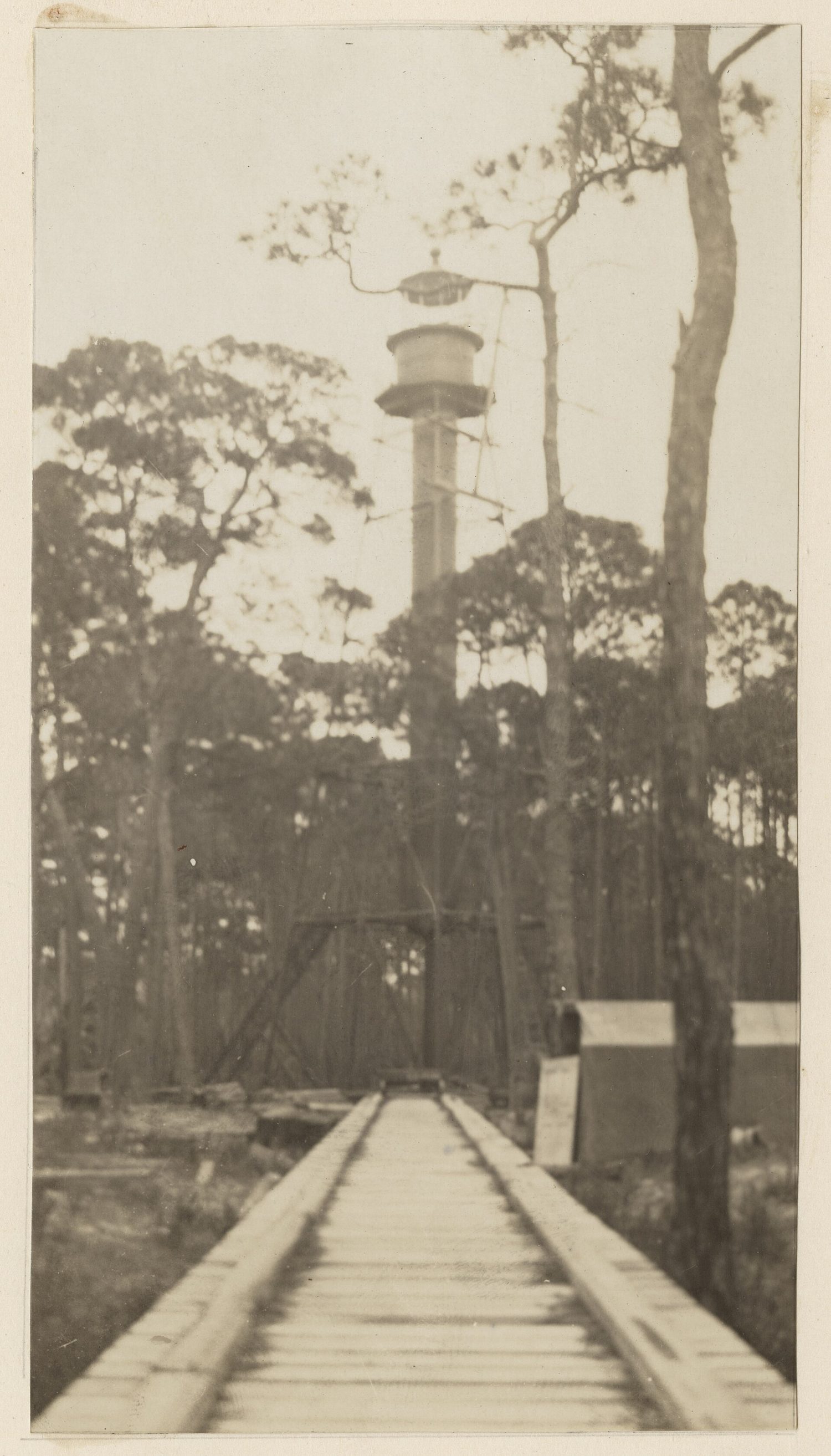
West of town, in Gulf County, sits Cape San Blas and its lighthouse. The cape is a barrier peninsula, a thin arm of sand that curves into the Gulf. The lighthouse has been rebuilt and moved multiple times over the decades, because the cape itself is unstable. The sand shifts. The water moves. The lighthouse is repositioned to keep standing.
That is the history of Port St. Joe in miniature. Every structure here has been moved, rebuilt, or replaced. The original constitution hall is a reproduction. The original town is a memory. The lighthouse has been relocated more than once because the ground it stands on will not hold still.
The cape is not a monument to the constitution. It is a monument to the indifference of the coast. The same forces that destroyed the first St. Joseph — water, wind, epidemic — are still present. The town has simply learned to rebuild on the far side of them.
What the Numbers Say
The census figures are not dramatic. Median household income is $60,347. Median home value is $280,600. Median gross rent is $1,342. Unemployment is 6 percent. Thirty-three percent of residents hold a bachelor’s degree or higher. These are not boomtown numbers. They are not collapse numbers either. They are the numbers of a small town that has found a stable footing after a long run of instability.
The median age of 52.9 years tells the rest of the story. This is a town of people who have been through something, or who came here because they wanted a place that had been through something. There is no youth bulge. There is no frenzy. There is just a town that has been erased and rebuilt enough times to know what matters.
The Lesson of the Ruins
Port St. Joe does not need to be sold. It does not need adjectives. It needs to be understood. Florida’s first constitution was written in a town that was gone within six years. The town was destroyed by fever and storm, not by time. It was not slowly forgotten. It was violently removed.
And then it came back. Not as a replica, not as a museum piece, but as a working town that carries the old name and the old claim. The motto is on the water tower. The park is outside town. The lighthouse is down the cape. And the town itself is still here, rebuilt, occupied, and waiting for the next storm.
That is the whole story. It does not need decoration.
Every business named above is one we hold a listing for, and every date traces to a source on our sources page. We do not describe menus, interiors or service we have not verified. Details change — confirm before you travel.