Guides · Port St. Joe, Florida
The Industry That Built Port St. Joe, Florida
The industry that built Port St. Joe is not timber, not cotton, and not tourism. It is government, and before that, it was a constitution. The town's modern quiet is the deliberate product of a place that has already died once. Its resilience is measured in the rebuilt port, the preserved constitution, and the seasonal rhythms that now define it.
How Port St. Joe Rose from Ruin
The original St. Joseph was a frontier boomtown, built on speculation and the promise of a deep-water port. It rose fast, and it fell faster. A yellow fever epidemic in 1841 scattered the survivors and gutted the population. Three years later, a hurricane sent a storm surge across the peninsula. What structures remained were destroyed. The site was abandoned. The town's entire existence—from founding to ruin—spanned roughly six years. What stands today is not a continuation; it is a namesake. The modern town carries the saint's name of the settlement that died here, with Port added. Everything here has been rebuilt at least once.
Where Florida's Constitution Was Written
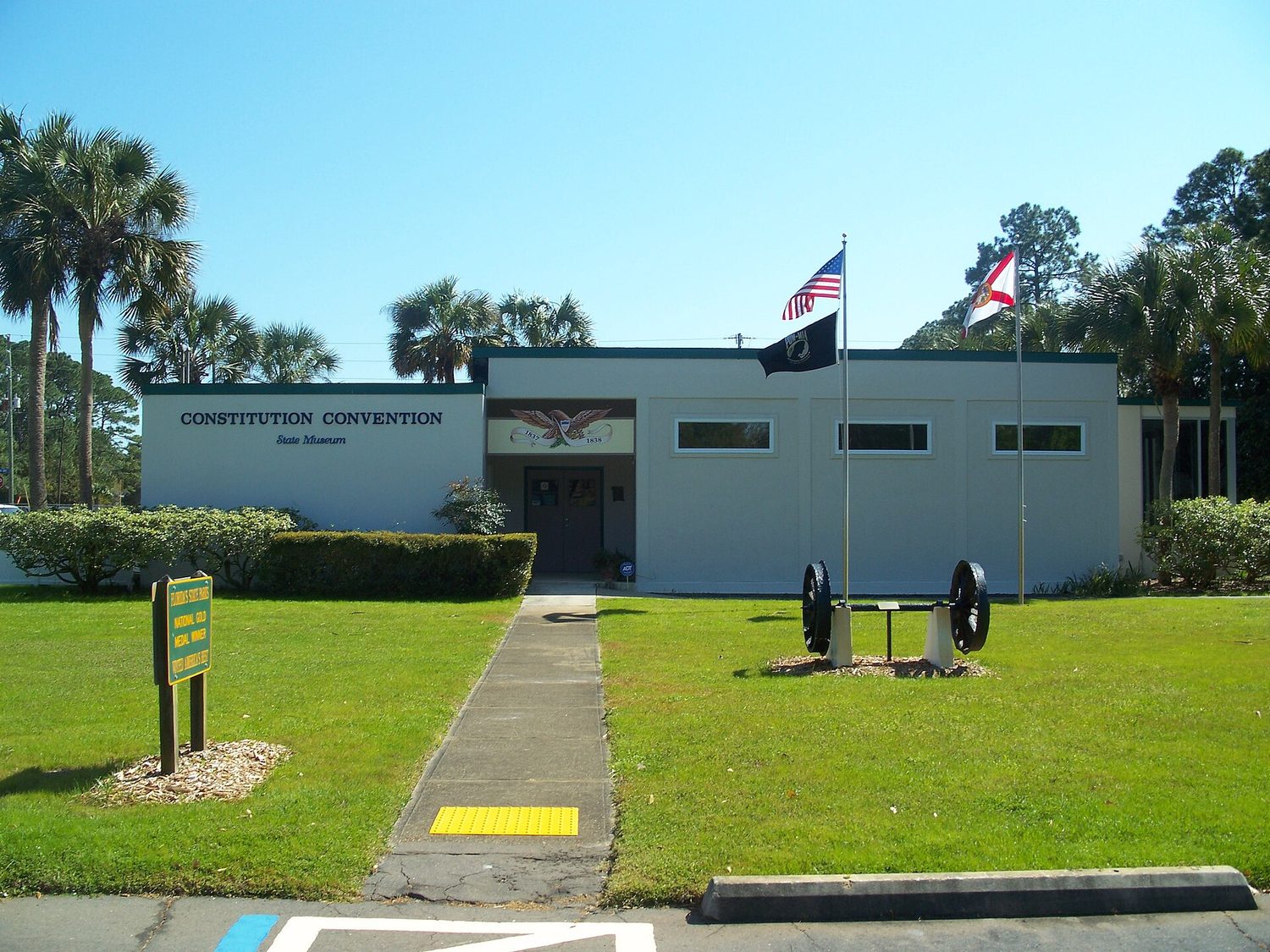
Before the fever and the storm, St. Joseph hosted one of the most consequential political gatherings in Florida's history. Territorial delegates met in the town from 3 December 1838 to 11 January 1839 to draft the state's first constitution. The town's motto remains Birthplace of the Florida Constitution. The document they produced was the condition for statehood, and it was written in a place that would not survive to see the state it helped create. Today, the Constitution Convention Museum State Park sits on 14 acres outside town, with a reproduction of the convention hall and audio-animated recreations of the 1838 delegates. It is a strange, deliberate thing: a museum in a town that died, commemorating the founding of a state that outlived it.
The Port That Took the Name
The original settlement was built on the idea of a port—a deep-water harbor on the Gulf that could move cotton and goods from the interior. The town died, but the geography did not. The port that replaced it took the same name. The modern Port St. Joe is a working waterfront, and the name "Port" is not decorative; it is the original purpose, resumed after the first attempt failed. The port ties the town's economy to the water, and it is the reason the town exists at all, twice.
Port St. Joe's Housing Market: Second Homes and Seasonal Shifts
The census tells the story of a town that is not what it was, and not what it might become. Port St. Joe has 2,037 total housing units. Of those, 473 are vacant. That is a vacancy rate just over 23 percent. The town is not shrinking so much as it is changing hands—270 homes are held for seasonal or recreational use, meaning the permanent population of 3,499 swells and contracts with the calendar. The median age is 52.9 years, a retirement town's number. Median household income is $60,347, and 33 percent of residents hold a bachelor's degree or higher. Unemployment is 6 percent. The housing stock is not cheap: median home value is $280,600, and median gross rent is $1,342. This is a town where people come to settle down, and where second homes outnumber the empty ones by a margin that suggests a place still being rebuilt, one roof at a time.
| Measure | Number |
|---|---|
| Total housing units | 2,037 |
| Homes held for seasonal or recreational use | 270 |
| Vacant housing units | 473 |
| Median home value | $280,600 |
| Median gross rent | $1,342 |
| Median household income | $60,347 |
| Population | 3,499 |
| Median age | 52.9 years |
| Bachelor's degree or higher | 33% |
| Unemployment rate | 6% |
Florida Scallop, Music & Arts Festival: A Labor Day Tradition
The town's main annual event is the Florida Scallop, Music & Arts Festival, held Labor Day weekend at Gulf County Veterans Memorial Park on Beacon Hill, run by the Gulf County Chamber of Commerce. It closes out the scallop season—the harvest that the coast is named for. The festival is not a founding celebration and not a memorial; it is a harvest festival, marking the end of a season that brings people to the water. It is the town's rhythm now: not the boom of a frontier port, but the reliable turn of a season, year after year.
Beyond the Town: Cape San Blas and the Gulf
West of town, Cape San Blas juts into the Gulf, and its lighthouse stands as the natural counterpoint to the historical narrative. The cape is the reason the original port was possible—a deep-water channel close to shore, a place where ships could come in. The lighthouse is the modern marker of that same shore. For the visitor, it is the other half of the story: the historical town died, but the land and the water that made it possible are still here, still working.
The answer to what happened to the original town of St. Joseph is simple: it died. Fever took the people, and the storm took the buildings. The constitution that was written there survived because it was carried away, and the port was rebuilt because the water was still there. What is there to see today is the museum, the port, and the cape. What the town is like now is a place of empty houses and seasonal renters, of retired people and second homes, of a festival that marks the end of the harvest. It is not paradise. It is a town that has already been erased once, and it knows what it is.
Common questions
- What happened to the original town of St. Joseph?
- The original town of St. Joseph was mostly abandoned in 1841 after a yellow fever epidemic, and a hurricane storm surge in 1844 destroyed what structures remained. The town was erased within three years of its founding.
- Why is Port St. Joe called the birthplace of the Florida Constitution?
- Territorial delegates met at St. Joseph from 3 December 1838 to 11 January 1839 to write Florida's first constitution. The town's motto is still Birthplace of the Florida Constitution, and the Constitution Convention Museum State Park preserves that history.
- Is there anything to see about the old constitution convention?
- Yes, the Constitution Convention Museum State Park sits on 14 acres outside town and features a reproduction convention hall with audio-animated recreations of the 1838 delegates. It's the main place to learn about Florida's statehood beginning here.
- How did the modern town get its name?
- The modern town carries the saint's name of the settlement that died here, with Port added. Everything here has been rebuilt at least once—the first town was erased by fever and storm, and the port that replaced it took the same name.
- What is there to do near Port St. Joe?
- Cape San Blas and its lighthouse are west of town in Gulf County. The Florida Scallop, Music & Arts Festival happens Labor Day weekend at Gulf County Veterans Memorial Park on Beacon Hill, closing out the scallop season. Nearby Apalachicola is 23 miles away.
- What kind of community is Port St. Joe today?
- The population is 3,499 with a median age of 52.9 years. Median home value is $280,600, median gross rent is $1,342, and median household income is $60,347. About 33 percent hold a bachelor's degree or higher, and the unemployment rate is 6 percent.
Every business named above is one we hold a listing for, and every date traces to a source on our sources page. We do not describe menus, interiors or service we have not verified. Details change — confirm before you travel.