Guides · Port St. Joe, Florida
Port St. Joe, Florida: What People Get Wrong
The town that wrote Florida’s constitution was abandoned within three years, and the place that carries its name today is a second attempt, not a continuation.
The Name Is a Memorial, Not a History
People assume Port St. Joe is simply the modern spelling of the 1830s settlement. It is not. The original St. Joseph was a separate town, built on a different site, and it died. Yellow fever emptied it in 1841; a hurricane’s storm surge in 1844 finished the ruins. The port that later rose nearby took the same saint’s name, with “Port” added to distinguish it from the ghost. The current town is not the old one, repaired. It is a replacement that chose to honor a name.
That distinction matters because the town’s motto — “Birthplace of the Florida Constitution” — refers to the dead town, not the living one. Territorial delegates met at St. Joseph from 3 December 1838 to 11 January 1839 and wrote the state’s first constitution there. They did so in a place that would be erased within six years. The modern town inherited the claim, but not the buildings, the streets, or the population. It inherited a title and a story.
The Museum Tells the Story of a Failure
Constitution Convention Museum State Park sits on 14 acres outside town, with a reproduction convention hall and audio-animated recreations of the 1838 delegates. It is not a preserved original site; it is a reconstruction, built to explain what happened where nothing remains. The park’s existence is itself the point: the original convention hall is gone, and the museum is a deliberate act of memory.
Visitors expecting a restored historic district will be disappointed. There is no original town to walk through. The museum is the stand-in, and it does its job precisely because it admits the original is lost. The audio-animated delegates are not relics; they are actors in a retelling. That is the honest way to present a town that vanished.
The Census Tells a Second Story
The current population is 3,499 people, with a median age of 52.9 years. That is an older town, and the housing data reflects it. Of 2,037 total housing units, 473 are vacant, and 270 are held for seasonal or recreational use. Roughly one in four homes is not a primary residence. The median home value is $280,600, and the median gross rent is $1,342. Median household income is $60,347, and the unemployment rate is 6 percent. A third of residents hold a bachelor’s degree or higher.
These numbers describe a place that is partly a retirement and vacation destination, not a working port or a booming convention town. The seasonal units and the high vacancy rate suggest a community that swells and shrinks with the calendar. The median age suggests a place where people come to settle down, not to start out. That is not a criticism; it is a correction to the myth that Port St. Joe is a continuous, bustling settlement with deep commercial roots.
What Remains Is the Coast, Not the Town
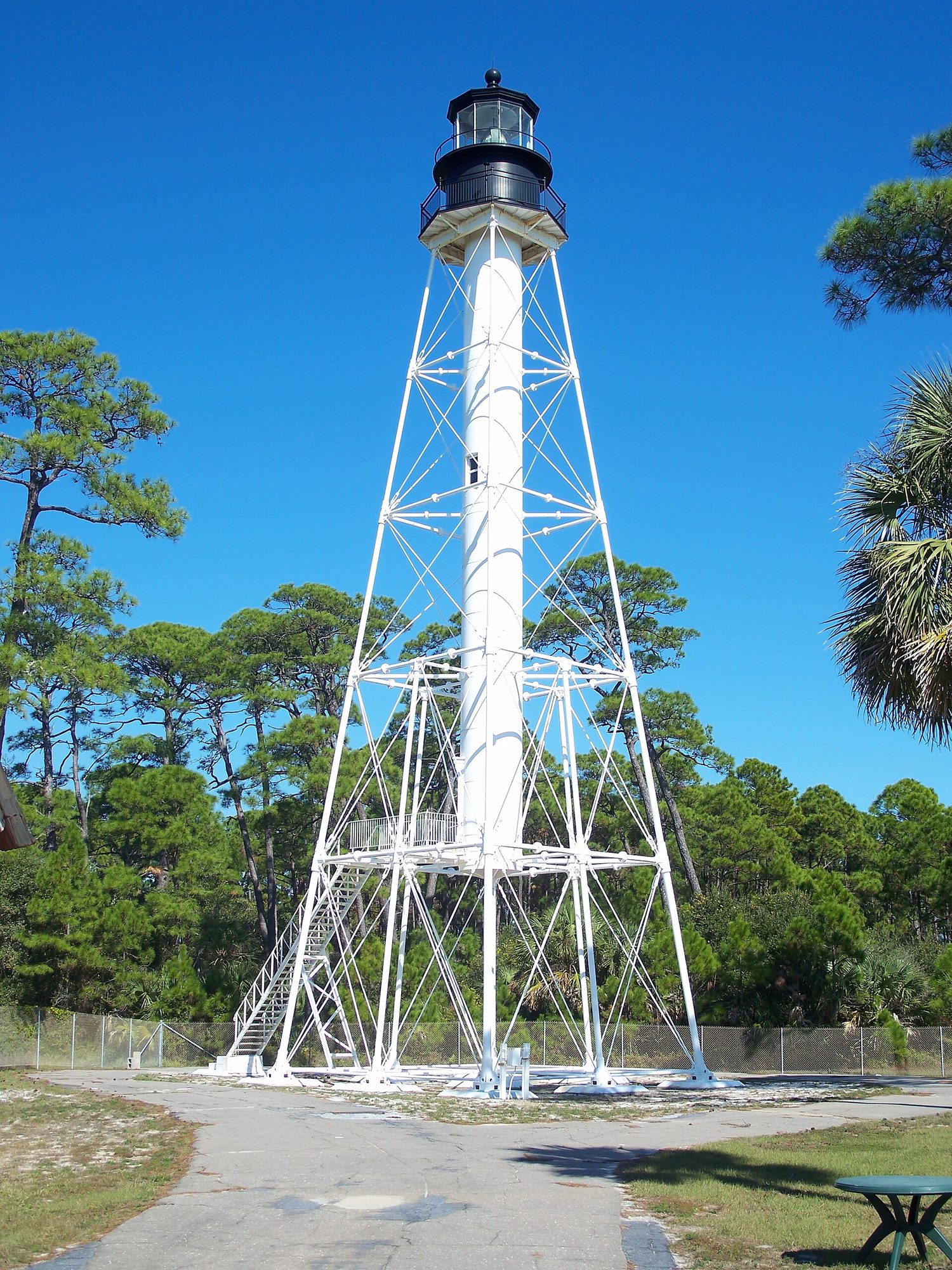
The original St. Joseph was a port town, and the coast is still the reason anyone comes here. Cape San Blas and its lighthouse, west of town in Gulf County, are the natural anchors. The modern town’s identity is tied to the water, but the water does not remember the 1830s. It is the same Gulf, but the town that faced it is gone.
The annual Florida Scallop, Music & Arts Festival runs Labor Day weekend at Gulf County Veterans Memorial Park on Beacon Hill, organized by the Gulf County Chamber of Commerce. It closes out the scallop season that gives the coast its name. The festival is a contemporary event, not a historical reenactment. It celebrates a living industry, not a dead town.
Nearby Towns Offer Contrasts
Apalachicola, 23 miles away, hosts the Florida Seafood Festival. St. George Island, 31 miles away, has a chili cook-off. Perry, 121 miles away, holds the Florida Forest Festival. Steinhatchee, 134 miles away, runs the Fiddler Crab Festival. Cedar Key, 163 miles away, has a seafood festival. Dade City, 238 miles away, celebrates the kumquat. Each of these towns has its own festival, its own history, and its own relationship to the land.
Port St. Joe is the only one of these whose founding event was a constitutional convention, and the only one whose original town was destroyed within six years. That is what people get wrong: they treat Port St. Joe as a quaint, continuous community. It is not. It is a town that chose to carry a dead name, and the choice is heavier than most visitors realize.
The Real Lesson
The story of Port St. Joe is not about resilience in the usual sense. The first town did not rebuild itself; it was abandoned and destroyed. The second town was built later, by different people, with a different layout, and it took the name as an act of homage. That is not the same as survival. It is more like inheritance — a name passed down without the bloodline.
The census numbers, the vacant units, the seasonal homes, the older median age — all of it points to a town that is still defining itself. It is not a living monument to 1838. It is a place that lives alongside a memory, and the memory is of a failure. That is the truth, and it is more interesting than the myth.
Common questions
- What happened to the original town of St. Joseph?
- The original town of St. Joseph was mostly abandoned in 1841 after a yellow fever epidemic, and a hurricane storm surge in 1844 destroyed what structures remained. The modern town carries the saint's name of the settlement that died here, with Port added.
- Why is Port St. Joe called the birthplace of the Florida Constitution?
- Territorial delegates met at St. Joseph from 3 December 1838 to 11 January 1839 to write Florida's first constitution. The town's motto is still Birthplace of the Florida Constitution, and the Constitution Convention Museum State Park preserves the site with a reproduction convention hall.
- Is there anything to see about the old constitution convention?
- Yes, Constitution Convention Museum State Park is 14 acres outside town, with a reproduction convention hall and audio-animated recreations of the 1838 delegates. It is the main historic site commemorating Florida's statehood beginnings here.
- How many people live in Port St. Joe now?
- The population is 3,499 people, with a median age of 52.9 years. There are 2,037 total housing units, of which 270 are held for seasonal or recreational use and 473 are vacant, reflecting the area's mix of permanent and vacation homes.
- What's the economy like in Port St. Joe?
- The median household income is $60,347, and the unemployment rate is 6 percent. Median home value is $280,600, and median gross rent is $1,342. About 33 percent of residents hold a bachelor's degree or higher, indicating a modest, educated workforce.
- Are there any annual events in Port St. Joe?
- Yes, the Florida Scallop, Music & Arts Festival happens Labor Day weekend at Gulf County Veterans Memorial Park on Beacon Hill, run by the Gulf County Chamber of Commerce, closing out the scallop season the coast is named for.
Every business named above is one we hold a listing for, and every date traces to a source on our sources page. We do not describe menus, interiors or service we have not verified. Details change — confirm before you travel.